Thursday, 20 February 2014

Bharti Airtel Becomes First Company To Cross The 200 Million Mobile User Mark


Bharti Airtel had a great start for the new year with few important achievements. The telecom company rolled out 4G  service to mobile phone users in Banaglore. Earlier this week, the telecom service provider acquired Loop mobile for Rs 700 Crore. Under the new agreement, Loop Mobile’s 3 million subscribers in Mumbai will join Airtel’s over 4 million subscribers bringin Airtels total subscriber base in Mumbai to 7 million.
Now, Airtel has announced that it has crossed the 200 million mobile subscriber mark in India. It is also the first one to cross the 200 million mobile user mark. Airtel is the largest telecom operator in India, both in terms of customers and revenues. The operator added 100 million users in less than 5 years. Prior to this, it had crossed the 100 million mark in 2009. The company, which started in 1995, is the world’s fourth largest telecom company by subscribers with operations in 20 countries.
airtel-new-logo
Gopal Vittal, Joint MD & CEO (India), Bharti Airtel said in a statement, “We are delighted to have reached this major milestone. It is gratifying to see the trust our customers have reposed in our brand and it will be our endeavor to continue delighting them with innovative and world-class services. We will also continue to invest towards building a robust data network of the future and be at the forefront of India’s mobile broadband revolution”.
The leading global telecommunications company further revealed that its distribution channel is spread across 1.5 million outlets, with network presence in 5,121 census and 460,655 non-census towns and villages in India covering approximately 86.7 percent of the country’s population. Airtel has the largest rural mobile customer base in India with over 88 million mobile customers (from rural markets).
Bharti Airtel, with around 29% market share, was ahead of Vodafone Services India Pvt. Ltd, which had 162.18 million mobile subscribers (23% share) and Idea Cellular that had 130.2 million subscribers (18.5% share), at the end of January, according to data from the Cellular Operators Association of India, a lobby group.

Survey uncovers IT savings in the cloud


Survey uncovers IT savings in the cloud
According to a new report, firms that have migrated the majority of their IT to the cloud save over 15% on IT spending as a percentage of revenue. The research, carried out by Computer Economics, found reductions in data centre and IT personnel costs.
The survey of seven organisations that either fully or largely migrated their systems to the cloud found that IT operational spending as a percentage of revenue was reduced by 16.3 per cent on average, while IT operational spending per user was reduced by an average of 18.5 per cent.
The organisations that were that surveyed included two manufacturing companies, a life sciences company, a wholesale distributor, a systems integrator and an online content provider. All had annual revenues between $50 million and $550 million and employed between 135 and 860 people.

New initiatives

Respondents used a variety of cloud providers, including Amazon, Autodesk, Box.com, Coupa, Docusign, Insperity (ExpensAble), FinancialForce, Google, Infor, Microsoft Dynamics, NetSuite, Okta, Paylocity, Plex, Rootstock, Salesforce.com, Saleslogix, Ultimate Software, Virtustream, Workday, and yieldEx.
As a result of the savings delivered by cloud uptake, it was found that organisations are able to spend more on new initiatives and less on ongoing support.
In a statement, Computer Economics wrote: "The cost savings, combined with strategic benefits in speed, scalability, and agility, argue in favour of organizations moving aggressively to the cloud."

Microsoft dishes out new CRM features


Microsoft dishes out new CRM featuresMicrosoft has spilled the beans on some of its upcoming customer relationship management (CRM) solutions, designed to offer smarter marketing and more personalised customer care.
First up, MarketingPilot will be rebranded as Microsoft Dynamics Marketing and will add marketing automation to Microsoft Dynamics CRM.
New features include a visual campaign designer, lead management and scoring abilities, scalable email marketing, and deep marketing analytics.
A new Unified Service Desk will offer enhanced management capabilities, including ones shifted from the recently acquired and closed Parature firm.

Personal and social

Additional features include self-service via support portals, and Facebook and Twitter to Web chat and video. These give new ways to engage with customers and offer support in a way that suits individual needs.
Microsoft also unveiled Microsoft Social Listening, which analyses social conversations to help businesses and marketers understand and measure customer sentiment. It can also track products, brands, campaigns, and competitors.
"The new Microsoft Dynamics CRM update democratizes social listening, adds new marketing capabilities for more impact and enables businesses to deliver outstanding customer service. With this new release, we are essentially changing the CRM game," said Bob Stutz, corporate VP of Microsoft Dynamics CRM.
The new CRM product will launch in the second quarter.

Industry voice: 2014: The year of the tablet?


Industry voice: 2014: The year of the tablet?
It is widely predicted that by the end of 2014, the growth in new tablet sales will have reached the point that they will permanently overtake sales of new PCs.
This is a long way from the launch of the original Apple iPad when many dismissed them as little more than giant phones that you couldn't fit in your pocket.
What has happened to tablets in the last two or three years is remarkable. The attraction of tablets for the average user is obvious: they are easy-to-use, fun and you can do 90% of what you could ever want to do on a computer without having a big ugly desktop PC or laptop cluttering up the place.
Combine this with the attractive price point provided by Android-based tablets and it becomes very clear how they have achieved such massive market penetration.

Impact on ecommerce

The ubiquity of tablets presents interesting design challenges for online retailers. Tablets may display your website in a similar way to desktop PCs, but how people interact with your shop is very different.
In order to give tablet users a good experience, you will need to make sure that all your links, buttons and checkout fields are large enough so that visitors can press on them with a big, imprecise fingertip rather than clicking on them with a pixel-perfect mouse cursor.
You may even choose to go further than that and adopt a responsive design for your website that redisplays intelligently based on whether a customer is holding the tablet horizontally or vertically.
Although potential customers may browse with their tablets, will they feel secure enough to actually submit an order through a handheld device?
Up until recently, the accepted wisdom of many online retailers and ecommerce providers was that when it comes to making an actual transaction, people will go back to their faithful PCs.

New experiences

However, in 2014 that is no longer the case. Most people use their tablets at home, rather than out and about, so they will be perfectly happy to enter credit card information there and then.
And even if people are using their tablets in a coffee shop or on the bus, the ubiquity and confidence in PayPal means that it's easy, quick and secure to make transactions on the go.
Tablets are here to stay, and it is up to online retailers to make sure that everyone has a great experience visiting their shop, no matter what device they use.
If you don't have your own tablet, borrow one from a friend and check how easy (or not) your site is to use with a touch screen.
Look at your Google Analytics data. Under 'Audience' you'll see an option called 'Mobile'. You can use this to see how many people are looking at your site with a mobile device.
Talk to your web designer or ecommerce software provider about what options there are for improving your site's performance on handheld devices.
  • Chris Dicken is an ecommerce consultant at SellerDeck, helping small businesses to make the most out of the internet

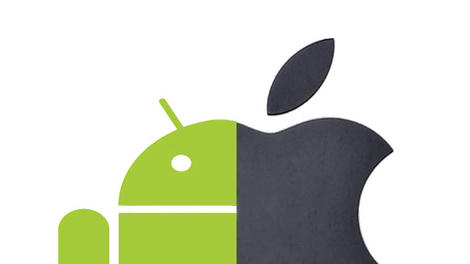
Android handsets are a lot cheaper than iPhones? Shocking!


Android handsets are a lot cheaper than iPhones? Shocking!While it might seem obvious that an Android phone is cheaper than Apple's iPhone range, the average price of a phone running Google's OS is now half the price of that from the Cupertino brand.

According to statistics site Statista (where you can see the price differences rising over the years) that difference currently sits at $374 (£224, AU$414), with iPhones selling at an average of $650 (£390, AU$720) and Android's selling with a mean value of $276 (£165, AU$305).
That means in 2013 the average Android handset was only around 40% the cost of an iPhone. So what do these numbers actually mean?

Global issue

In truth, the numbers are more indicative of a worldwide trend rather than that of the western world. While Android flagships like the HTC One or Galaxy S4 do generally come in cheaper than their Apple counterparts, the price issue is much wider.
Android handsets have dominated the budget market for quite some time thanks in no small part to the open source nature of Android. No cost to license the OS has led to a proliferation of super-cheap device, and even using the 'full fat' Android OS means lower-cost handsets like the Huawei Ascend G510 or the Samsung Galaxy Fame still bringing a relatively premium experience.
This has led to Android becoming the OS of choice in emerging markets such as India and Brazil, areas where the 16GB iPhone 5S currently retails at a high 53,500 Rupees ($860, £515, AU$950) and 2,799 Real ($1170, £700, AU$1295) rather than the $649/£549/AU$869 in the US, UK or Australia.
It has also meant that the average global Android handset price has dropped from $441 ($265, AU$490) in the past 3 years to the $276 we see today.
It doesn't mean that we can expect the 'All new HTC One' or the Samsung Galaxy S5 to come out half the price of the iPhone 6 though.

McAfee outs Threat Intelligence Exchange for real-time protection


McAfee outs Threat Intelligence Exchange for real-time protection
McAfee has announced the Threat Intelligence Exchange, a local and global threat intelligence sharing system designed to offer real-time protection from advanced threats.
The Intel-owned firm has expanded its Security Connected Platform, which launched in 2011, to include new ways to detect and protect against rising security threats. The result is a reduction in response times from days or even months to just milliseconds.
McAfee highlighted the fact that many businesses fail to identify breaches for days or weeks, and said that there is a need for what the company's CTO, Mike Fey, called "adaptive threat prevention."
The Threat Intelligence Exchange is designed to seek out security risk patterns, protect against newly-identified malware, and prevent data theft, all in real-time.

Adaptive threat intelligence

Some of the features of the Exchange include increased visibility of vulnerabilities, enhanced protection through collective threat identification, and sharing of contextual intelligence, such as certificate and reputation information, for better understanding of environmental threat context.
It also provides cost-savings from replacing manual tasks with automated sharing of security intelligence, and the potential for additional savings thanks to simple implementation and integration.
The Threat Intelligence Exchange will launch in the second quarter of 2014.

Galaxy S5 to launch with only a Full HD display?


Galaxy S5 to launch with Bored of S5 rumours? Well, here's another: Samsung could be struggling to make enough high-res screens
Last week we'd have bet heavily on a few inalienable truths about Samsung's next flagship phone: the Galaxy S5 will have a larger screen, it'll come in two flavours, and the headline model will have a QHD display.
But that suddenly looks a little less likely according to ET News, which claims that the Galaxy S5 will launch in two flavours, but the first to hit the shelves will be the Full HD S5 (in early April / late March, according to the latest information) followed by the QHD option later in the year.
Separate sources have also confirmed this to TechRadar as well, which means we're inclined to believe the veracity.

QHD chicken or Full HD egg?

The question is whether it's the display itself that's tough to make, or Samsung being able to increase the graphical processing power to a sufficient level to run the pixels – either way, the QHD panels have not even begun production, according to the report, while Full HD versions (which use a new type of pixel arrangement to improve the screen over the Galaxy S4) are already rolling out.
There's also a question over the frame to be used with the S5 – will the QHD model come with a metal frame, or will that be used to give the Full HD flagship some lustre?
Rumours suggest that it might be tricky for Samsung to produce metal bodies to the level required for a widespread handset like the S5, which would explain the need to have two options on sale.
Either way it's less than a week until we see one of the (likely) big-hitting phones of 2014 – we just can't wait until the speculation stops.
  • What's that? You LOVE speculation? Well, we can help there too with our Samsung Galaxy S5 release date, news and rumors page.

New smartphone app may help you fix abusive boyfriend


Image
Good news for victims of dating violence or an abusive relationship! 

Scientists have developed a new smartphone app that warns young women of a dangerous partner by helping them examine their relationships and potential behavioural red flags. 

In an effort to connect more young women with safety information, researchers developed the "One Love My Plan" smartphone application, an interactive tool that helps college-age women in abusive relationships clarify their priorities and customise personal safety plans. 

"Women between the ages of 18 and 24 are at the highest risk for dating violence. However, these women are less likely than older adults to seek formal safety resources and instead look to peers or technology for help and advice," researchers said. 

"At some point, almost everyone knows someone in an unhealthy relationship," said Tina Bloom, an assistant professor at the University of Missouri's Sinclair School of Nursing. "The purpose of the My Plan app is to quickly and confidentially provide women and concerned friends with information and available resources. Our goal is not to replace existing services, but to better connect students with them," said Bloom. 

To ensure that young women would find the app helpful and comprehensive, Bloom and her colleagues conducted focus groups with college-age women who identified themselves as survivors of abusive relationships. 

"The My Plan app gives students tools to examine their relationships, set their priorities and privately access resources when they are ready," said Bloom. 

Previous studies show that, across all socioeconomic backgrounds, millennials comprise the age group most likely to own smartphones, and many smartphone users access health information using their mobile devices, researchers said. 

Bloom said the free app is filled with helpful features, including information on healthy relationship dynamics, common relationship violence myths and potential behavioural red flags. 

The app developed in collaboration with Johns Hopkins University School of Nursing and the One Love Foundation also has sample scripts for approaching friends who are possibly in dangerous relationships and personalised safety plans based on users' priorities and backed by scientific research.

100 per cent campus placement at XLRI


With an average package of over Rs 16 lakh, students of the Xavier School of Management ( XLRI) Jamshedpur has achieved 100 per cent campus placement for its 2012-14 batch. 

Officials of the premier B-school said the final recruitment process saw participation from 103 recruiters recently which made 254 offers for a batch of 245 students. 

The recruitment ended on the fourth day and the median salary of the batch was over 16.25 lakh per annum, they said. 

This year around 32 new recruiters joined the campus placement. 

BFSI and consulting firms recruited from the institute in large numbers with around 50 per cent of business management students being offered roles in finance and consulting domains. 

Students of XLRI's human resources programme secured excellent job offers across sectors like consulting, FMCG and general management, officials said. 

At least 79 students were offered PPOs (Pre-Placement Offers) from their summer internships, a near 25 per cent increase over the past year.